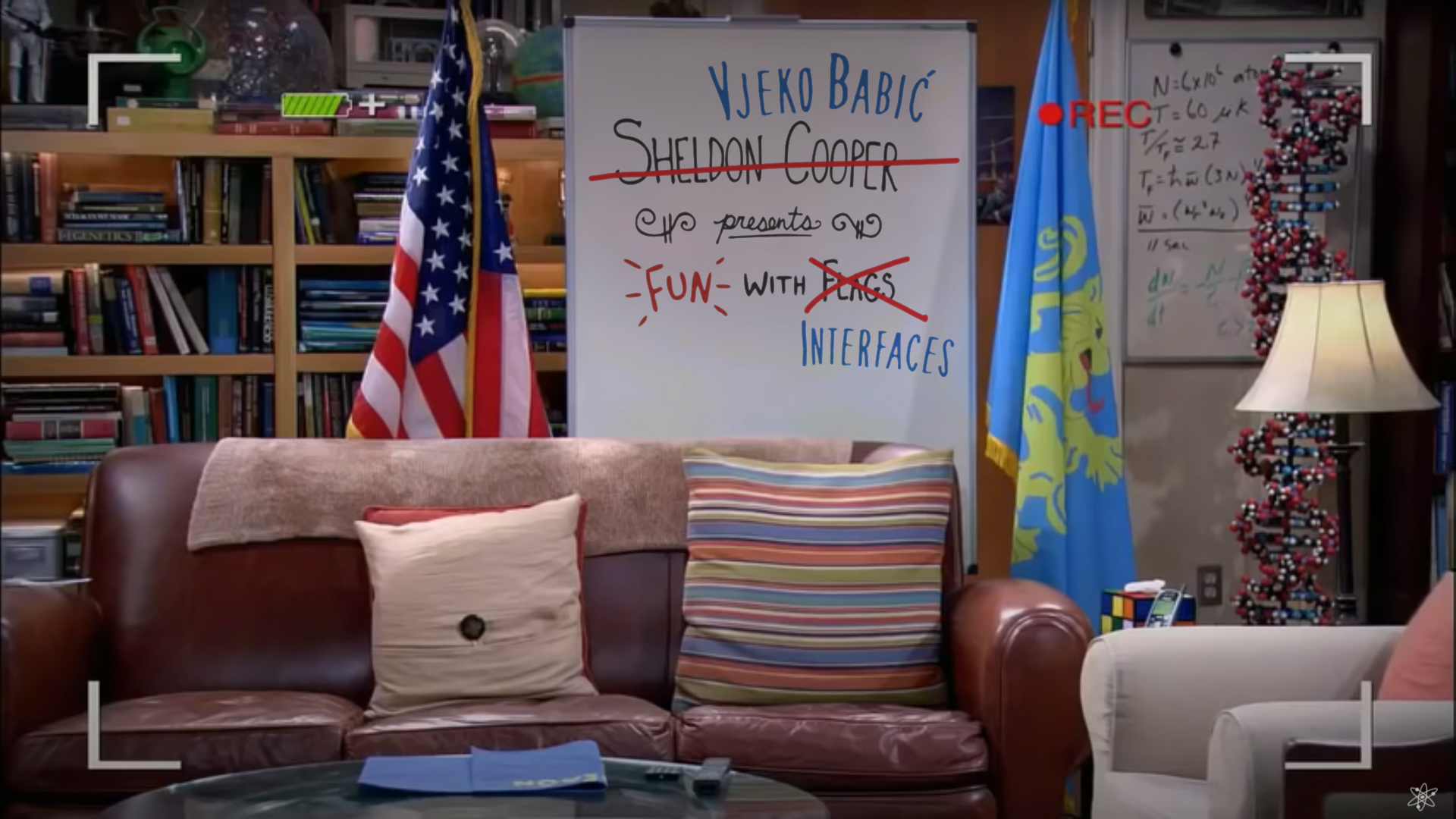
Fun with Interfaces

  • Reading time:1 min read

Today I’ve streamed the Fun with Interfaces video blog at https://www.youtube.com/watch?v=QSMHL32c5mg and the recording is now published online.

This was the first session I ever delivered about interfaces, and I actually planned delivering this a lot earlier (I made a suggestion to run this at Directions ASIA before corona crisis hit), but never had a chance. I now polished the demos a bit and delivered it as-is (no slides, really, so – no theory, just practice).

I will have more to say on interfaces, definitely. Stuff like dependency injection, inversion of control, testability, etc. is all very interesting to discuss and very useful in our daily life with AL.

My today’s session not only shows what you can do with interfaces, but also what you cannot, and why. Maybe, who knows, at some point we get some improvements to address some of pain points from my video.

Thanks to everyone who joined me today, and I am looking forward to see all you next week in “Making InvokeExtensibilityMethod work” session.


Continue ReadingFun with Interfaces

Codeunit interfaces in AL

  • Reading time:8 mins read

Nearly two and a half years ago I had a dream. It was about codeunit references and codeunit interfaces. And today, nearly two and a half years later I am still here, still having the same dream. We still cannot do codeunit interfaces in AL. But it doesn’t mean we don’t need them. We do. We badly do.

Two things triggered me to write this post about how badly we need codeunit interfaces, or any kind of polymorphism: a NAV TechDays talk, and a github project I saw.

Continue ReadingCodeunit interfaces in AL
Read more about the article Module Binder Pattern proposal
Zlata Praha, by Roman Boed

Module Binder Pattern proposal

  • Reading time:17 mins read

Whoa! This has been quite an event, the Directions EMEA 2016 in Prague. There has never been this many people (1.700+) and it was quite a pleasure connecting again with old friends, and meeting new friends. Also, it has been quite a pleasure listening to many good sessions, and an even bigger pleasure delivering four of them.

And this is why I am blogging now – to follow up on my promise during my Polymorphic Event Patterns for C/AL. I promised you that I’d post my pattern proposal online, and here I am doing it.

Let’s get started.

Continue ReadingModule Binder Pattern proposal

I had a dream: codeunit references

  • Reading time:7 mins read

Polymorphism is a great thing. .NET, Java, C++ and other folks have enjoyed its benefits for a long time, some more than a quarter century already. Meanwhile, we, the meager C/AL bunch, can only dream about it and draft our little patterns that all come short of it if only by a tiny bit.

Sometimes it feels like writing code with a chalk on a blackboard. There may be no end to your imagination, but there is a very real end to what the board can do for you.

But dream we can. And let me have another dream.

Continue ReadingI had a dream: codeunit references

Gentlemen’s agreement pattern, or handling the “Handled” pattern

  • Reading time:11 mins read

I’ve delved deep into design patterns story with my last two blog posts, but I am far from over. The patterns I discussed are the ones we could use up until NAV 2015 (we can still use them, of course!) but some more robust loose coupling (excuse the near-oxymoron) can be achieved with what NAV 2016 brought along: events.

It’s the “Handled” pattern. This pattern comes from Thomas Hejlsberg, a chief architect and CTO of Microsoft Dynamics NAV, and was first described by Mark Brummel on his blog. It’s a powerful loose-coupling pattern that successfully addresses the shortcomings of all design patterns I discussed earlier. I would prefer calling this pattern Event Façade rather than “Handled”, but it’s not my baby to christen.

Let’s take a look.

Continue ReadingGentlemen’s agreement pattern, or handling the “Handled” pattern

Decoupling dependencies in C/AL

  • Reading time:11 mins read

Directions US 2016 (yes, 2016, sorry y’all who got the 2017 link in your mailbox) was quite an event. As Directions always is, a lot of people, enthusiastic about this market we strive to thrive in, and about the product we love no matter the limitations we often face when we aim for better, more scalable architectures.

If anything, it reminded me of a long to-do list I have had around for this blog for a while, and I decided to start cleaning it up. The topic of my main session this year was loose coupling of dependencies (I called it polymorphism, because that’s what I’d ultimately like to see possible in C/AL) and I presented two patterns I came up with during my past few years.

Before I present them here on my blog, I wanted to put them in a broader context: loose coupling. So, this is what this post is all about: explaining what loose coupling is, how to achieve it in C/AL, and why you will not want to live without it ever again.

Continue ReadingDecoupling dependencies in C/AL

Directions US 2016: Goodbye, Phoenix!

  • Reading time:3 mins read

Directions US. What more to say than: wow! This was an amazing conference, again. A lot of people, a lot of vibe, a lot of NAV. And this year, a lot to look forward to.

Microsoft didn’t disappoint with the news. Dynamics 365 is here with new paradigms, apps are the new big thing, and they really are. There are a lot of improvements in NAV 2017, in the technical stack and in the application alike, and there is a new code editor, something the geeky part of the NAV community has been waiting for a long time. All in all, quite something.

As always at Directions, I was busy. This year I got two sessions, and both of them went well. Thanks to all amazing people who participated and shared their thoughts and encouragement. The good tradition calls for me to post my content here on my blog, so here we go.

Continue ReadingDirections US 2016: Goodbye, Phoenix!