

Microsoft releases Sure Step 2012
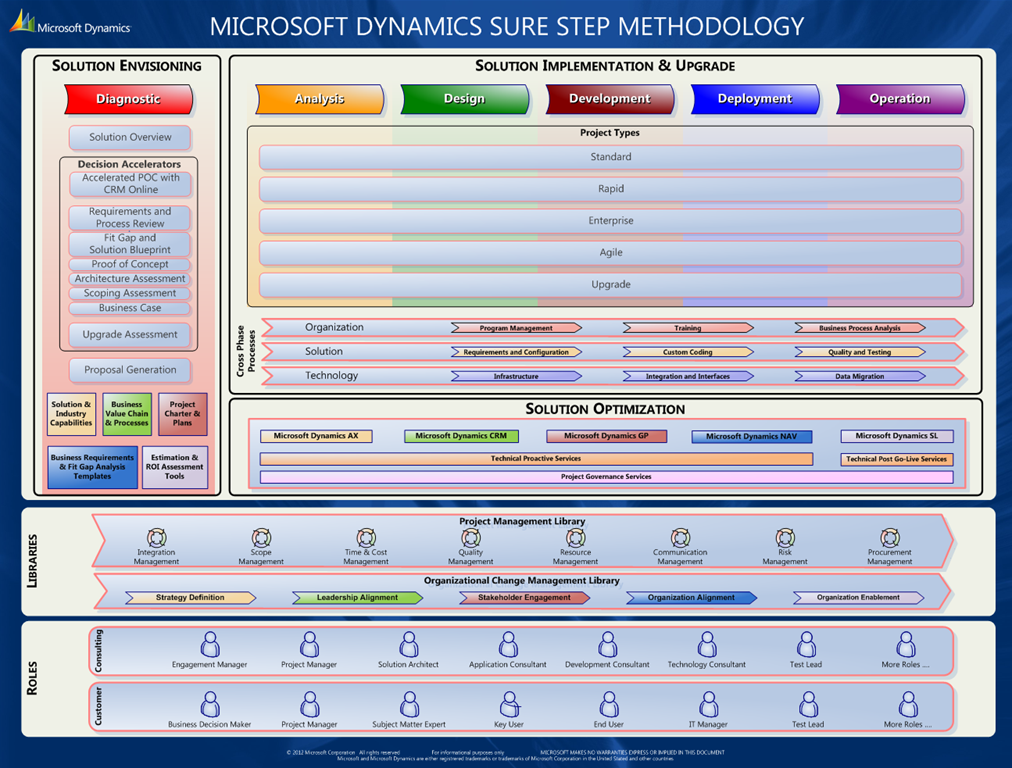 A couple of days ago, at a Sure Step 2010 training at Sundsgården, Helsingborg, Sweden, while students were preparing to take the exam, one of the students asks me where she can download Sure Step 2010. I give her the link, but she tells me: “No, that’s Sure Step 2012, I’d like to download 2010”.
That came as a surprise. “No way” – I say – “It hasn’t yet been released.”
Or has it?
And then I check, and almost can’t believe it – it’s really there. I completely missed the tweets, the Facebook announcement, the LinkedIn discussions. It seems that I’m not particularly social nowadays. A quick check of Twitter shows me that there wasn’t too much buzz around it, and most of the blogosphere simply redelivers the same content, which either comes from the official announcement (which I also missed
A couple of days ago, at a Sure Step 2010 training at Sundsgården, Helsingborg, Sweden, while students were preparing to take the exam, one of the students asks me where she can download Sure Step 2010. I give her the link, but she tells me: “No, that’s Sure Step 2012, I’d like to download 2010”.
That came as a surprise. “No way” – I say – “It hasn’t yet been released.”
Or has it?
And then I check, and almost can’t believe it – it’s really there. I completely missed the tweets, the Facebook announcement, the LinkedIn discussions. It seems that I’m not particularly social nowadays. A quick check of Twitter shows me that there wasn’t too much buzz around it, and most of the blogosphere simply redelivers the same content, which either comes from the official announcement (which I also missed  ) or from whoever blogged first.
Instead of giving a simple “excited” redelivery of the announcement, here’s my take on Sure Step 2012, what’s new, what’s not new (both sadly and thankfully).
) or from whoever blogged first.
Instead of giving a simple “excited” redelivery of the announcement, here’s my take on Sure Step 2012, what’s new, what’s not new (both sadly and thankfully).
The Beauty and The Beast: NAV and .NET
 If there wasn’t one already, someone should have invented Belgium. There are two things in this world that I love, and probably shouldn’t (and an oversized red speaker’s shirt I got from Luc today did a darned god job at concealing the unlucky consequences of overly indulging in both of them): beer and chocolate. Boy, do Belgians know their beer and chocolate!
Stratus Setup Wizard launches pilot in LATAM
Today, Stratus has officially entered the pilot phase in Latin America, after the latest build…
- Go to the previous page
- 1
- …
- 82
- 83
- 84
- 85
- 86
- 87
- 88
- …
- 161
- Go to the next page